
Xinghan Lecture | New Laser Welding Processes Solving Today’s Welding Challenges
What is laser welding? In simple terms, laser welding heats the workpiece surface with laser radiation; heat then diffuses inward by conduction. By controlling pulse width, energy, peak power and repetition rate, the material melts to form a controlled weld pool and completes the joint.
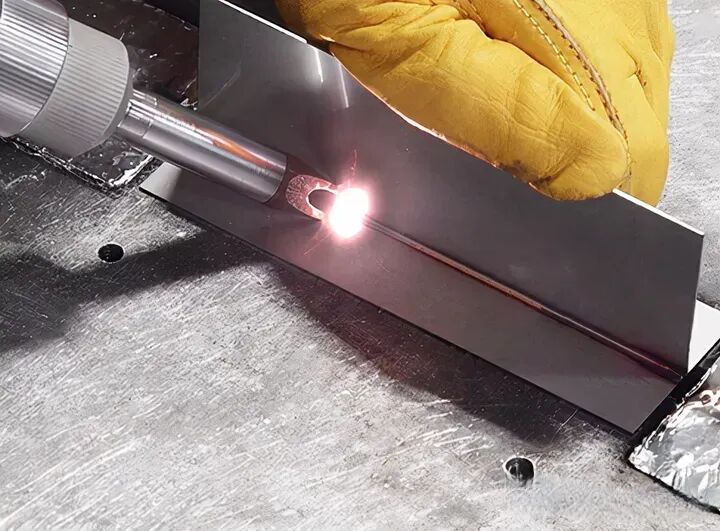
Laser welding can minimize heat input, keep metallurgical changes in the heat-affected zone small, and reduce distortion from thermal conduction. As a non-contact process, tool wear and mechanical deformation are also minimized. The beam is easy to focus, align and guide optically, can be delivered from an appropriate standoff, and can navigate around fixtures. Focusing into a small spot enables welding of tiny, closely spaced parts and a wide range of materials—including dissimilar joints. It is well suited to automated high-speed welding under digital or computer control, and avoids burn-through issues when welding thin sheets or fine wires.
Technology status: laser welding has advanced with laser sources. In recent years, new sources such as blue, green and femtosecond lasers, together with new processes like wobble welding and ARM (adjustable ring mode), have innovatively solved industrial welding challenges and accelerated adoption across manufacturing.
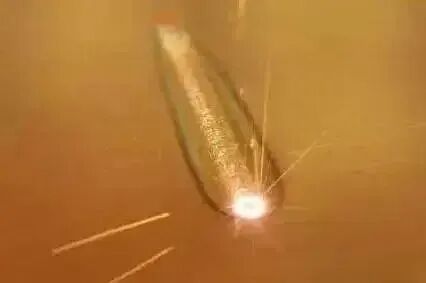
Metal laser welding. High energy density makes many difficult metals weldable, yet highly reflective materials such as gold, silver, copper and aluminum—and dissimilar joints—still pose challenges: (1) high reflectivity and thermal conductivity require higher starting power; (2) high-power welding is sensitive to surface-state changes, affecting bead formation; (3) high travel speed can introduce porosity, especially in aluminum alloys.
Efficient laser welding of copper and copper alloys. Copper’s excellent electrical and thermal conductivity makes it widely used in electronics and EVs—motors, batteries, sensors, harnesses and terminals.
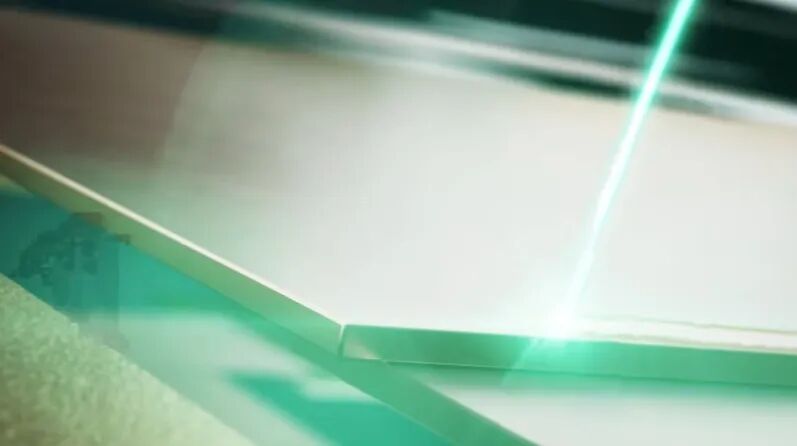
In the past, metal laser welding mainly relied on infrared lasers. Yet copper’s thermal conductivity is about 5× that of pure iron and 1.7× that of pure aluminum, while IR absorption is low. Straight IR welding tends to have an unstable process window and large penetration fluctuation, with spatter, porosity and unstable melt depth. With the rise of high-power short-wavelength lasers, visible-light and hybrid welding have become ideal for highly reflective materials such as copper.
(1) Green laser welding. Green light (about 500–560 nm) is absorbed by copper at ~40% for λ≈515 nm—roughly 8× the absorption of ~1 µm IR—with higher coupling efficiency and lower sensitivity to surface oxidation.
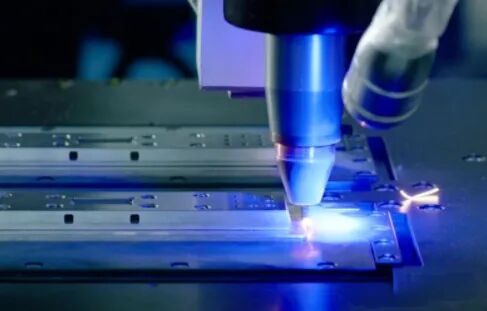
(2) Blue laser welding. Shorter wavelengths mean higher photon energy and better absorption. Blue lasers (400–500 nm), generated directly by GaN-based semiconductor lasers, further improve process windows for copper and other reflective metals, reducing spatter and stabilizing penetration—especially when combined with beam scanning, defocus and power modulation.